How Tube Expansion Work
By HJ Heng
16 June 2026
In the past, we used to have an old boiler maker we called him uncle Leong who is a master in boiler tube replacement works. His skill in conducting boiler tube expansion was guarantee with 100% success rate and no seepage during hydrostatic test.
I always wonder how the boiler tube can stuck tightly on a tube sheet to withstand pressure and hydrostatic pressure. Below is some interesting engineering understanding of a tube-to-tube sheet join.
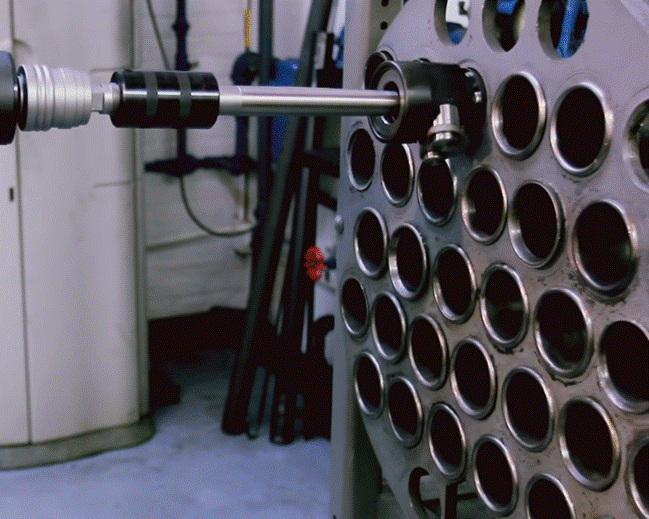
The expanded joint of multiple tubes to tube-sheet is the simplest method for this type of tube terminating design. A tube is inserted in the tube hole and plastically deformed by mechanical rollers or drift pins. How the magic of expansion will hold the tube in place?
The strength & tightness of the joint is a result of the residual stress created in the tube wall and the tube seat material by the expanding process which deforms the tube to fill up the tube hole.
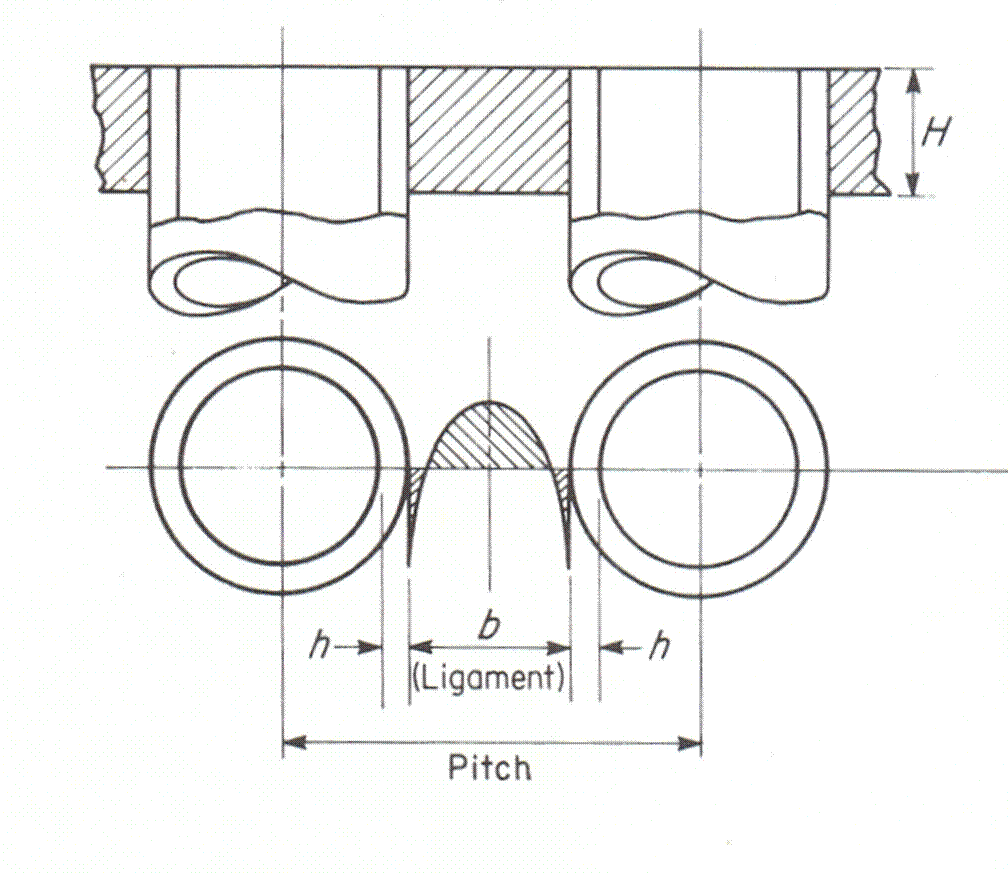
In practice, in order to make sure the tube is deformed to fill up the tube hole, the tube is usually slightly over-expanded thereby inducing a compressive residual stress in the tube seat material immediately adjacent to the tube, See Figure 1.
The yield strength of the tube material is selected to be equal to or less than that of the tube seat material otherwise the tube would merely act as a spacer for the expander and spring back upon withdrawal of the expander.
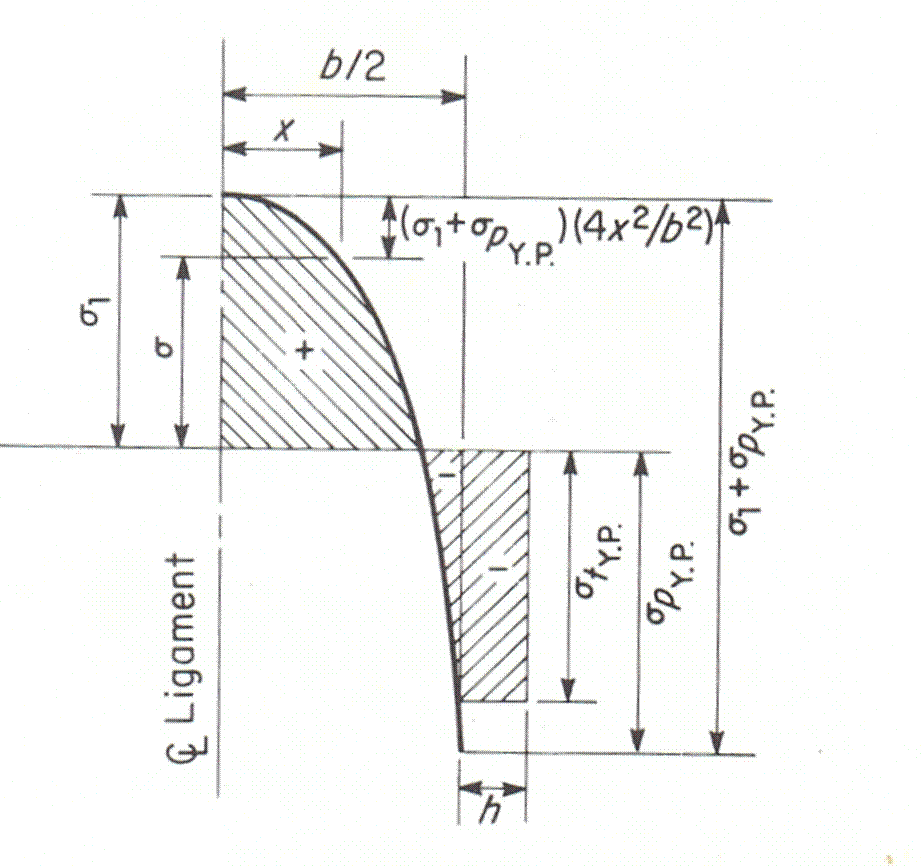
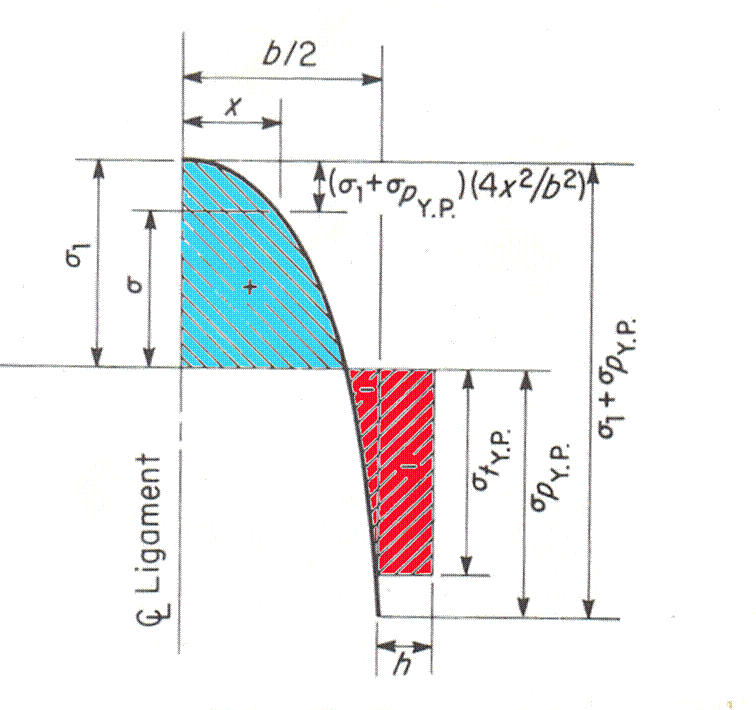
This type of joint is widely used in boilers, condensers & heat exchangers. The minimum ligament for an expanded tube joint can be established by analysis. The direct residual stress in the ligament varies from yield point compression at the edge of the hole to tension at the center of the ligament, Figure 2. The summation of the residual forces must equal zero; which means that the area under the tension curve (blue) must equal the area under the compression curve (red) plus that of the tube wall.
A reliability factor Fr which is depending on the type of tube joint will be used to estimate the allowable tube joint end load. In PD5500, for expanded only joint, Fr is 0.5. For expanded plus welded with minimum weld throat greater or equal to tube thickness, Fr is 0.88. This is the highest value allow by Table 3.9-2 of #PD5500.